A Growing Rat Infestation Plagues Tent Cities in Gaza
“We are suffering from two wars,” Majd Sukar, the head of the Preventive Health Department in Gaza City, said. “The war of bombs, and the war of rats.”
Drop Site is a reader-funded, independent news outlet. Without your support, we can’t operate. Please consider becoming a paid subscriber or making a 501(c)(3) tax-deductible donation today.
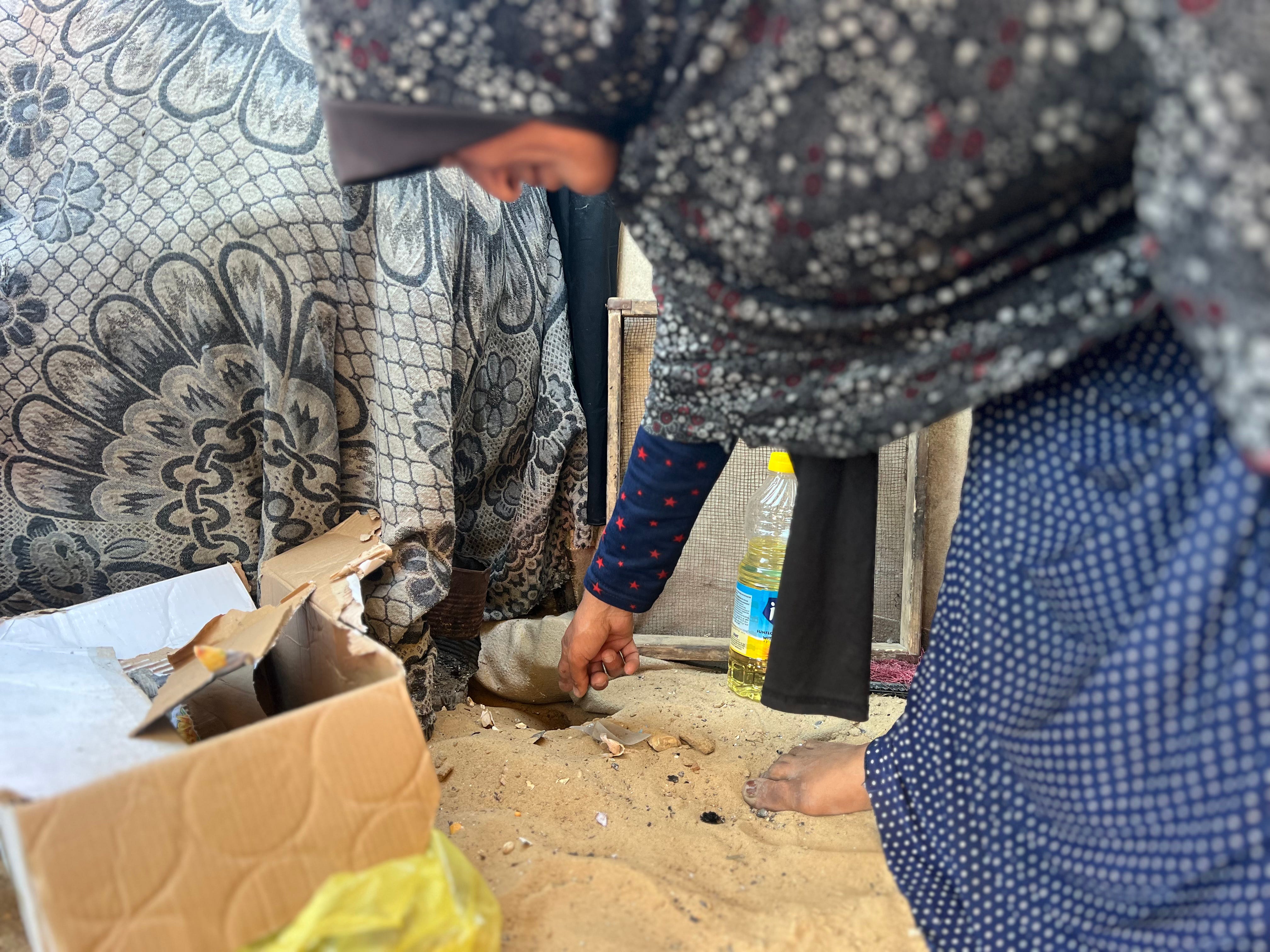
Story by Ahmed Dremly
GAZA CITY, Gaza—Nahla Al-Majdob woke up in the middle of the night last week to her seven-year-old daughter, Aya, screaming in their tent. “I turned on my phone light but I didn’t see anything at first,” Al-Majdob told Drop Site News. “Then I noticed bite marks on Aya’s toe.” It was not the first time. “I’ve woken up many nights to find rats around our mattresses,” she said. “Sometimes they’re right next to us, sniffing.”
Like nearly all Palestinians in Gaza, Al-Majdob and her family were forced from their home by the war and have been living in a flimsy tent near what used to be the port on the shoreline of Gaza City. Compounding the hardships of displacement is a growing population of rodents menacing families across the enclave.
“The rats come out from the rubble and the garbage,” Al-Majdob said. “They crawl over our clothes and gather where we store food. If we leave anything out, it will be contaminated.”
Al-Majdob, her husband, and her daughter, are all diabetic, making them particularly vulnerable to infection from rat bites. Her family has come to fear the night, when the rats forage in the dark, chewing through tents, clothes, and flesh.
“Before the war, I would never eat anything touched by rodents, but now, if I find them in the white flour, I sift it and use it anyway,” she said. “If I throw everything away, we will starve.”
She added that the rodents also appear to have become bolder as their numbers have grown. “They’re not afraid of us anymore,” she said. “I push them away with a stick or anything I can find, but they keep coming back after a few minutes.”
Palestinian families in Gaza are living in overcrowded tents and makeshift shelters, surrounded by waste and debris, with limited access to safe water and sanitation services. Among the widespread and severe environmental health hazards that result from the conditions, the United Nations reported this month, is a proliferation of rodents as well as cockroaches, flies, and other pests, contributing to disease transmission.
In a rapid assessment of more than 1,600 displacement sites across Gaza this month, the UN found that, in over 80% of them, rodents and pests were frequently visible, affecting 1.45 million people. Practically all of the affected families reported skin infections, including scabies, lice and bedbugs, with more than 70,000 cases recorded so far in 2026.
On April 12, Amani Abu Selmi was absorbed in preparation for her upcoming wedding, which was just one week away. She has lived with her family of five in a makeshift tent near Nasser Hospital since 2024 after their home in Khan Younis was destroyed in an Israeli airstrike. She went through the traditional rituals of a bride-to-be, checking and showing each piece of clothing to friends and relatives who stopped by. The next morning, her joy was shattered. Rats had chewed their way inside and shredded her belongings.
Abu Selmi’s mother, Ghalia, was returning from the market when she found her younger daughter, 13-year-old Samar, running toward her screaming that something terrible had happened. Inside the tent, Ghalia found Amani standing in shock, holding up pieces of her torn bridal dresses.
“The mice and rats spared nothing,” Ghalia told Drop Site. “These were new clothes for her, and now they were riddled with holes. I started crying because I knew how hard it had been for us to afford them in the first place.”
Amani had tried to protect her clothes from rodents, covering them with a wooden board weighed down by stones. But the rats and mice had burrowed underneath.
“She was especially heartbroken over her hand-embroidered Palestinian thobe,” Ghalia said. “She had dreamed of wearing it the morning of her wedding. It’s part of our tradition.” Rodents, fleas, and insects have long been an issue in their tent but Ghalia said the situation has deteriorated dramatically over the past three months.
Several days ago, Ghalia said she found her 19-year-old son’s eye had swollen shut. “There were small bite marks near his eye. He didn’t even realize what had happened until I asked him. He said he felt something on his face while sleeping,” she said. She took her son, Raef, to the nearest Red Crescent clinic, where doctors confirmed that the wound had become infected and prescribed him a course of antibiotics.
“They move all day inside the tent freely,” Ghalia said. “Even when it’s full of people, they dig tunnels underneath us.” She said she caught 20 mice in a single day using sticky traps, but it did little to contain the problem. “I tried to block their holes with mud again and again, but they always come back,” she said. “It’s terrifying. I can’t live like this anymore.”
Majd Sukar, the head of the Preventive Health Department for the Gaza Municipality, told Drop Site that complaints about rodents have significantly increased since the so-called ceasefire in October 2025, when the Israeli military halted its scorched earth bombing campaign even though it continues smaller scale attacks on an almost daily basis.
“The scale of destruction in Gaza has created ideal breeding grounds,” Sukar said. “The Israeli blockade on rodenticides, the mountains of uncollected waste, and untreated sewage are the primary drivers of this crisis.”
The municipality’s efforts to tackle the situation have also been severely limited by Israel. “We’ve lost most of our municipal vehicles in Israeli attacks,” Sukar said. “We simply don’t have the capacity to remove waste or respond effectively.”
Israeli restrictions on aid into Gaza have hampered efforts to deal with the growing rodent infestation. According to Doctors Without Borders, Israel has repeatedly denied the entry of multiple items needed for basic health sanitation, including rodenticide and insecticide.
“We’ve tried to find alternatives,” Sukar said. “We worked with Gaza’s university experts and tested different alternatives, but none were effective. Even many local initiatives have failed. Many people have brought us homemade poisons, but they don’t work either.”
The municipality has launched awareness campaigns, advising families to store food securely, clean their surroundings, and seek medical care immediately after bites, especially for children and those with chronic illnesses. Yet Sukar said they are fighting a losing battle.
“Rats are now everywhere in Gaza, in destroyed homes, shelters, hospitals, everywhere.” Reports have also grown of a large, particularly aggressive and adaptable rat known as the Norway rat. “We urgently appeal to the UN Secretary-General that we need waste removal equipment and pest control supplies. This is not a secondary issue, it’s a public health catastrophe,” Sukar said.
“We are suffering from two wars,” he added. “The war of bombs, and the war of rats.”
Saber Dawas, a 38-year-old father of six, has tried desperately to keep the rats at bay inside their tent in a displacement camp in Al-Yarmouk stadium in central Gaza City.
He tried storing food in plastic containers, sealed bags, and even a cleaned drum for storing flour. “It didn’t matter,” Dawas said. “A rat chewed straight through the drum.”
Even though food is expensive and scarce, he ends up throwing away whatever he suspects was contaminated. He now suspends most of his food supplies in plastic bags from a wooden stick wedged into the tent’s frame, hoping to keep it out of the reach of rodents.
He said he sleeps lightly, constantly on alert. “Sometimes I feel like I’m guarding my family all night,” he added. “We’re at the beginning of summer. This will only get worse.”